What Should You Notice Inside St Mark’s Basilica?
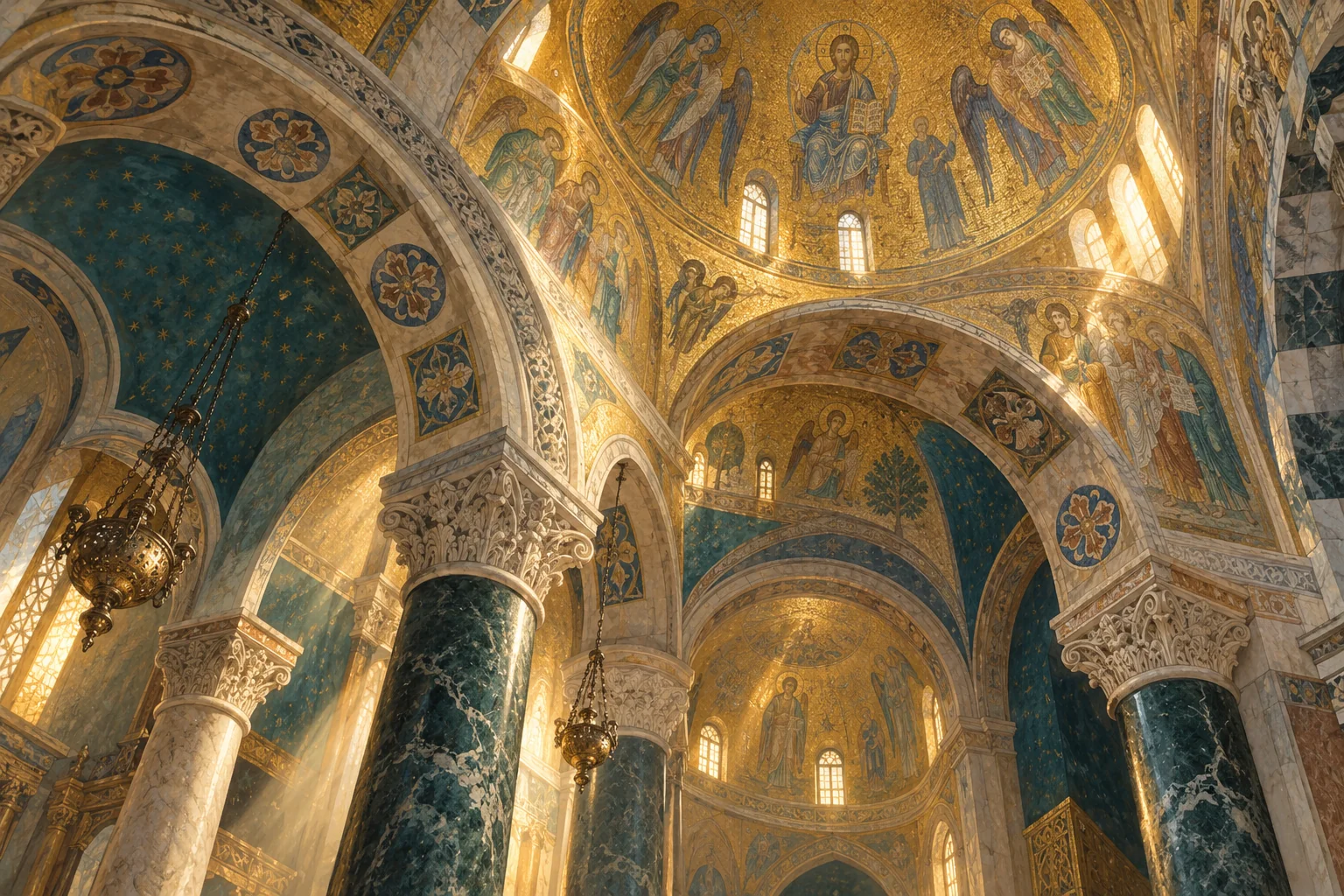
St Mark’s Basilica can overwhelm the eye before you have properly begun looking. Gold catches the light, surfaces seem to bend and patterns compete for attention. A useful approach is to stop trying to see everything at once. Choose three scales: the whole space, one narrative scene and one small material detail. Moving between them turns a dazzling interior into a place you can actually remember.
Start with the building’s long timeline
The basilica’s official chronology places the beginning of the present reconstruction in 1063 and its consecration in 1094. Earlier churches had already occupied the site. The interior is therefore better understood as a layered achievement than as a room frozen at one date. Later work, repair and additions are part of the story, not distractions from an imagined untouched original.
Keep that distinction in mind when hearing broad labels such as Byzantine or Gothic. They can introduce an artistic language, but they do not explain every object or surface. A good guide will connect a particular detail to its time and purpose. If an interpretation sounds too neat, ask which part of the building or which historical phase it describes.
Let your eyes adjust before taking photographs
On entering, give yourself a moment to understand the light and volume. Look upward, then toward the arches that organize your view. Gold mosaics do more than make a space luxurious: their changing relationship with light can draw attention toward different parts of a curved surface. You can appreciate that visual effect without identifying every saint or episode.
Choose one scene you can comfortably see from the permitted route. Notice the direction of gestures, the grouping of figures and the relationship between the image and the architecture around it. You might ask what the composition emphasizes before reading the explanation. This simple exercise makes an unfamiliar visual language less intimidating and keeps the visit from becoming a race between labels.
Look down as well as up
Patterned stone and marble deserve some of the attention normally claimed by the vaults. Compare repeated shapes, shifts in color and the way a surface meets a column or doorway. Materials carry their own history of sourcing, movement and reuse. Resist the temptation to touch a detail because it looks wonderfully tactile; looking closely and keeping a respectful distance work perfectly well together.
Venice’s connections across the Mediterranean matter here. The official chronology records that the events of 1204 brought horses, artworks and marbles from Constantinople. That is a reason to ask about conquest and transfer as well as artistic exchange. Beautiful objects can have complicated journeys, and a thoughtful account does not have to flatten those journeys into a celebratory story.
Check your exact ticket before planning the route
The basilica, museum areas and any additional spaces mentioned in a tour may have distinct access arrangements. Do not assume every balcony, treasury or special area is part of standard entry. Check the current official visitor information and the specific operator’s inclusions. Opening arrangements can also respond to worship and venue needs, so treat an old blog’s timetable as a starting clue rather than a guarantee.
Dress requirements, photography rules, bags and security procedures should be confirmed before your visit. This is a religious building as well as a major attraction. Keep voices low and follow staff directions, even when a group is eager to move on. For anyone with mobility or sensory needs, ask about the exact route and conditions rather than relying on a general accessibility label.
Choose depth over a crowded schedule
A combined tour can help relate the basilica to the Doge’s Palace, but the two sites reward different kinds of attention. Decide whether you want a broad introduction or more time in one place. Our St Mark’s experience collection makes the comparison easier through real ratings, durations and descriptions. Confirm which parts are guided and which are free time.
Afterward, write down one detail that surprised you: a color, a repeated gesture, the shape of an arch or the effect of a particular patch of light. That observation can become the beginning of another art visit in Dorsoduro. You do not leave a great building with complete understanding. You leave with a more attentive eye, and that is a very good souvenir.
Sources & further reading
Turn a good read into a great day.
Find a highly rated Venetian experience that brings these stories to life.
Explore related experiences →