Why Is the Doge’s Palace So Important to Venice?
The Doge’s Palace is beautiful enough to distract you from its original job. Its lace-like stonework and grand interiors belonged to a place where Venice organized power, represented itself and conducted public business. Visit it as a working political environment, rather than simply a splendid residence, and the rooms begin to ask more interesting questions. Who was allowed inside? Who made decisions? What did visitors need to believe about the republic?
A palace with more than one purpose
The museum’s official building history explains that the complex combined the Doge’s residence with civic administration. The Doge held an elected office for life, but his authority was constrained; he was not an absolute monarch. That distinction is useful whenever a tour description casually calls this a royal palace. The building expresses an institutional identity as much as an individual ruler’s status.
Think of the visit as a sequence of thresholds. A courtyard, staircase, waiting space and council chamber each manage movement differently. Even without reconstructing every historic procedure, you can ask how architecture makes someone feel: welcome, impressed, observed or small. These are good questions to bring to a guide because they connect the physical rooms with the institutions that used them.
Look at the exterior before entering
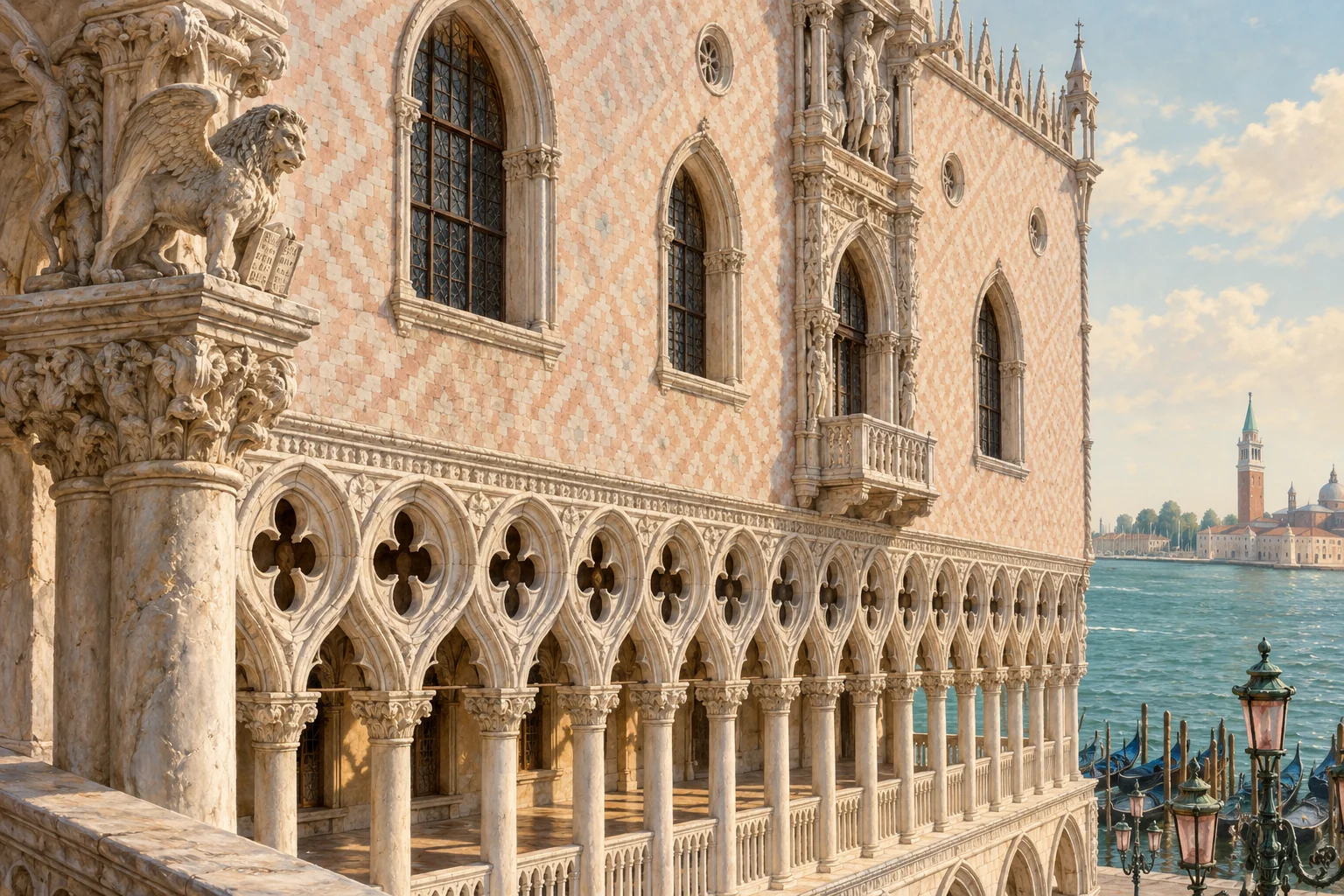
The palace was not created in a single campaign. Its Gothic character sits alongside later Renaissance and Mannerist additions, and major wings were rebuilt at different times. The official history identifies work on the lagoon-facing wing from 1340 and the square-facing wing from 1424. You do not need to memorize these dates, but remembering that the building grew over centuries helps explain its layers.
Choose a safe place to pause and compare solid wall with open arcade. Notice the rhythm of columns, pointed forms and the pale patterned surface above. The visual lightness is striking for such a large civic building. Move out of the pedestrian flow before taking photographs; the palace frontage is part of an intensely used public space, not a private viewing platform.
Read grandeur as an argument
Inside, treat decoration as a form of persuasion. Large ceremonial spaces are designed to be experienced collectively, while images and materials can make authority appear stable, cultivated and inevitable. Rather than trying to identify every figure immediately, select one room and ask what kind of impression it creates. Then use the museum information or your guide to test that first response.
There is no need to pretend the history was uniformly glorious. A government building can hold achievements, exclusion, ambition and control in the same story. The Palace’s connection with the New Prisons through the Bridge of Sighs adds another dimension to that discussion. The museum dates this connection to the seventeenth century. Avoid turning the bridge into only a romantic photo opportunity; its setting belongs to a history of justice and confinement.
Choose the right kind of visit
A standard museum route, a specialist itinerary and a combined palace-and-basilica experience can offer different access. Read the exact inclusions rather than assuming that a familiar landmark name covers every room or passage. If a particular area matters to you, verify that it is explicitly included in your chosen option. Some routes may involve different physical demands or separate arrangements.
Our St Mark’s and Palace collection helps compare highly rated guided experiences. Look at group size, language and duration as carefully as the review score. Travelers who enjoy detailed political history may want a different pace from a family seeking a lively introduction. Ask about the meeting point, security and accessibility before committing to a fixed time.
Let the next stop deepen the story
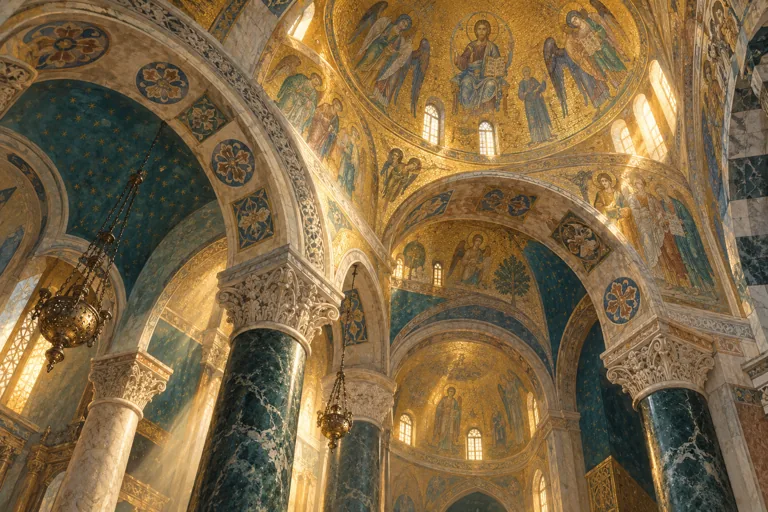
After the palace, resist rushing straight into another long interior unless that is genuinely your preferred day. Walk outside and look back at the facade with the political story in mind. If you do continue to the basilica, our guide to its mosaics and chronology offers a different lens: sacred space, materials and connections beyond Venice.
A good palace visit leaves you with a question rather than a complete list of rulers. Perhaps it concerns how republics represent themselves, how art makes power visible, or how a building changes after its original system disappears. Carry that question into a neighborhood walk or over lunch. The most useful history is the kind that changes what you notice next.
For a workable combination of history and neighborhood time, use our Venice day plans and keep the palace as the main anchor rather than one stop in an overfilled list.
Sources & further reading
Turn a good read into a great day.
Find a highly rated Venetian experience that brings these stories to life.
Explore related experiences →