Venice’s Palazzo Grimani: how do architecture and sculpture shape a visit?

Venice’s Palazzo Grimani rewards a question that is easy to forget in a museum: what does the room contribute to the objects? Here a doorway, a courtyard or a carefully framed view can be as interesting as the sculpture that first attracts you. You need not decide whether you prefer architecture or art. The pleasure is in noticing how they change one another.
Choose the Museo di Palazzo Grimani near Campo Santa Maria Formosa, in Castello. Venice contains several palaces associated with the Grimani name, so use the full museum name and address when planning. Our Castello walking guide provides neighbourhood context. Leave a little room in the schedule for finding the entrance without turning a wrong alley into a crisis.
Begin with the courtyard rather than a checklist
The official account of the building describes a medieval Venetian house transformed during the sixteenth century by Vettore and Giovanni Grimani. The remodelling drew on ancient domestic architecture and the Renaissance culture of Rome. This is a useful starting point, not a reason to label everything you see simply Roman.
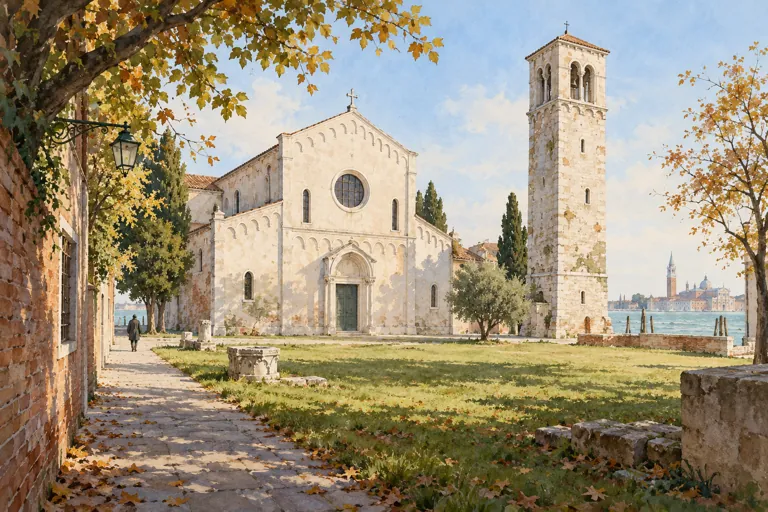
Look at the open space, the covered edges and the directions in which you can move. What can you see from one threshold that disappears when you step through it? Architecture unfolds in time because the visitor moves. A photograph compresses that process into one view. Spend a moment experiencing the change before choosing a photograph of your own, wherever photography is permitted.
Treat the Tribuna as an arrangement to understand
The Tribuna is a central part of the palace’s collection story. Rather than attempting to memorise every figure, consider how a room can give objects a hierarchy. Height, spacing, niches and light encourage some encounters before others. Ask what appears isolated and what forms a group. These observations can be made without inventing the original collector’s precise thoughts.
The history of the collection and its later movement is important. A modern museum presentation should not automatically be treated as an untouched sixteenth-century room. Read the current interpretation for the relationship between historical arrangement, surviving evidence and present display. If a work is absent or a room has a temporary installation, the website’s general history cannot guarantee that your route will match an older photograph.
A useful comparison is our Ca’ Rezzonico guide, where rooms and furnishings also require attention to display history. The comparison does not make the two palaces interchangeable. It gives you a portable question: which relationships belong to the historical building, and which help a museum explain it today?
Look closely at a surface before naming a style
Pick a decorative detail that is easy to see from the visitor route. Describe its material, shape and position. Then consult the museum information. If your first impression changes, that is a successful observation rather than a mistake. A pale surface may read very differently once you know how it was made or restored. Avoid touching even when a texture looks especially inviting.
Our Querini Stampalia article offers another nearby way to think about architecture across periods. For a broader Italian comparison, the Bagatti Valsecchi guide in Milan explores a later household’s deliberate relationship with Renaissance art. Such comparisons work best when the dates remain distinct.
Confirm the practical route before setting out
The museum information checked on 21 October 2026 lists Tuesday–Sunday opening, 10:00–19:00, with final admission at 18:00 and Monday closure. Groups require reservation. Tickets are sold at the ticket office or through the official Musei Italiani channels identified by the museum. Recheck the page for exceptions rather than relying on a generic Venice attractions timetable.
Consult the accessibility page for the route that suits you; it specifically notes a three-step difference in level on the second floor. Ask staff how current access arrangements relate to the rooms you want to see. The Venice experiences collection offers broader guided options, but named palace admission must be checked separately. A manageable plan with one thoughtful pause is a better companion than a promise to see everything.
Sources & further reading
Turn a good read into a great day.
Find a highly rated Venetian experience that brings these stories to life.
Explore related experiences →