Venice’s San Giorgio dei Greci: how should you combine the church and icon museum?

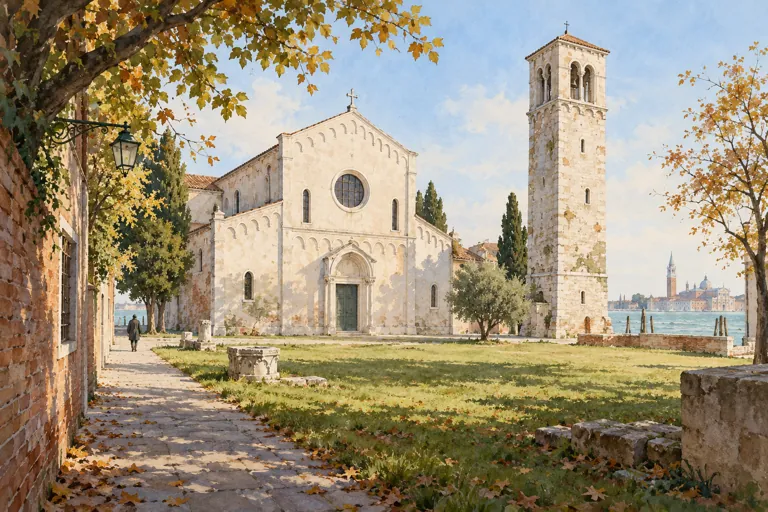
At San Giorgio dei Greci, Venice’s history becomes a story about a community keeping its language, worship and artistic traditions alive in another city. The church and the neighbouring icon museum offer different ways into that story. Visit them as two related places, with separate access arrangements, and the small area around Campo dei Greci becomes much more than a detour to a picturesque bell tower.
This is San Giorgio dei Greci, in Castello, not San Giorgio Maggiore on the island opposite St Mark’s. That distinction matters when checking a map or booking transport. Our San Giorgio Maggiore guide covers the island visit. For this outing, keep your attention on the streets east of the main St Mark’s area and leave enough time to find the correct entrance without hurrying.
Begin with the relationship between the buildings
The Hellenic Institute’s account of the complex dates the church’s construction to 1536–1577. Beside it, the Scoletta housed the Greek confraternity’s hospital; its first floor later became the museum. These functions make a useful starting point: worship, care and the preservation of cultural memory were connected here. A church facade alone cannot explain that wider social world.
Before entering, take a moment to locate the buildings rather than treating the whole complex as one attraction with one door. Ask what the setting tells you about neighbours sharing a small urban space. You do not need to know every architect or donor to recognise that buildings can hold the story of an institution as well as the story of a style. Keep that question in mind inside.
Look at an icon without demanding a familiar kind of realism
The museum’s own collection description includes Byzantine and post-Byzantine icons, manuscripts, documents and objects connected with the Greeks of Venice. It identifies many paintings with the Cretan school. This is a collection with particular histories and devotional uses, not simply a smaller version of a Venetian picture gallery. Read the label for the individual work before deciding what its appearance means.
Choose one panel and give it a few minutes. Notice the relationship between figure and background, the direction of a gaze, the placement of hands and the treatment of clothing. Describe what you can actually see before trying to interpret it. A gold field may direct attention differently from a painted landscape; a repeated pose invites comparison. Neither observation requires you to invent a symbolic meaning for every colour.
If another work represents a similar subject, compare them. Are the framing, scale and gestures alike? Does the label identify a different maker, period or place? Our guide to looking closely at a Venetian painting offers useful habits, but here the pleasure comes from letting the objects set their own questions. A museum visit becomes richer when you allow one work to challenge your expectations.
Keep museum visiting and worship separate
The institute’s current information, checked on 19 October 2026, lists the museum from Tuesday to Sunday, 10:00–18:00, with Monday closed. The church has its own shorter visiting schedule, also with Monday closed. Recheck both before travelling and respect services, any restricted areas and photography instructions. A museum opening time does not guarantee church access throughout the same period.
The museum is described as occupying the first floor. If steps or a change of level would affect your visit, ask the institution about the actual entrance and available assistance before committing to the route. Do not infer a lift or step-free access from a photograph of the courtyard. Allow room in your plan for a shorter visit or an exterior-only pause if the arrangements do not meet your needs.
Give Castello time around the collection
After concentrated looking, an unhurried neighbourhood walk is a good change of pace. Our Castello walking guide helps you think beyond a sequence of interiors. Keep doorways and bridges clear when checking directions, and resist the urge to fit every nearby church into the same afternoon. Remembering two works is often more rewarding than collecting six entrances.
For a guided day, compare the route and stated inclusions in our Venice experiences collection; a general city walk should not be assumed to include this museum. If your journey continues to Milan, the Ambrosiana visitor guide offers another way to consider art alongside a scholarly institution. Keep the comparison curious: each collection has its own history, and neither needs to stand in for the other.
Sources & further reading
Turn a good read into a great day.
Find a highly rated Venetian experience that brings these stories to life.
Explore related experiences →