Venice’s Redentore: how do facade and waterfront work together?

The Redentore is a church you can begin looking at before you reach its door. Across the Giudecca Canal, its pale facade gathers attention against the waterfront. Up close, that distant image breaks into steps, columns, doorways and changes of scale. A good visit allows time for both encounters, while remembering that this is an active religious building rather than a monument arranged solely for sightseeing.
The church stands on Giudecca, across the water from the central Venetian islands. It is not a walkable continuation of the Zattere promenade. Decide how you will cross and return before adding it to a busy afternoon. Our waterbus planning guide explains why the precise stop, direction and current timetable matter more than a straight line on a map.
Look from a distance before looking for details
From a safe public viewpoint, give the facade a moment without zooming in. Notice the broad triangular forms and the relationship between the church and the lower buildings beside it. Then move your attention towards smaller elements. This is an exercise in looking, not a claim that one particular viewpoint reproduces an architect’s intended experience for every visitor.
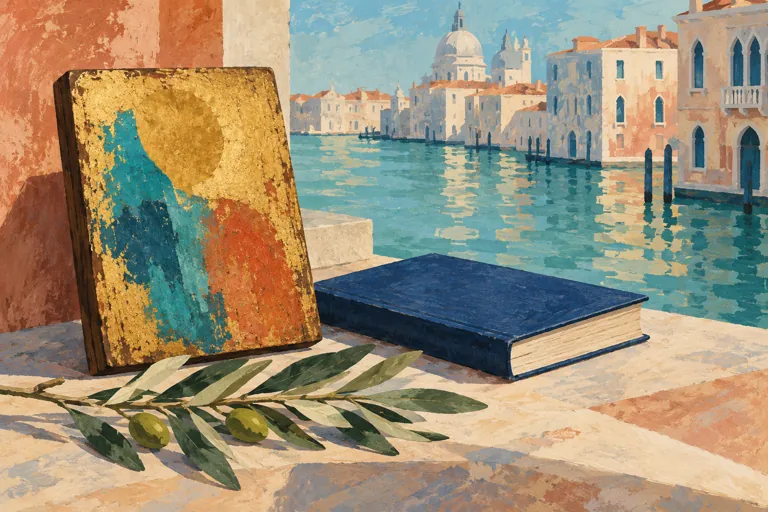
Water changes the encounter. Moving boats interrupt the view, reflections break up and a passing cloud can soften the contrast between stone and sky. You need not wait for an empty postcard scene. Keep landing stages and pedestrian routes clear, and let the ordinary activity of Giudecca remain part of what you see.
Give the church’s origin its proper weight
The Chorus account describes the Venetian Senate’s commission as a vow associated with the devastating plague of 1575–77. Construction began in 1577 to Palladio’s design; Antonio Da Ponte continued the work after Palladio’s death. That history gives the building a civic and religious purpose beyond its memorable silhouette.
A brief historical account cannot tell us how every person experienced that crisis. Avoid turning the church into a neat story in which a beautiful building resolves suffering. Instead, ask how a public vow takes architectural form: through a prominent site, a large collective space and a lasting presence in the city’s memory. Those questions make the facade more interesting without reducing it to a slogan.
Let the interior change the pace
Once admitted, pause before moving forward. Follow the transition from the main space towards the presbytery and choir, using the official interpretation to understand their different functions. A church’s arrangement directs movement and attention; it is not simply an empty container for separate artworks. Stay within the visitor route and do not enter areas reserved for worship or staff.
If you enjoyed thinking about the relationship between architecture and religious use at San Giorgio Maggiore, bring that curiosity here without assuming the two visits have identical arrangements. A tower ticket elsewhere, for example, establishes nothing about access to the Redentore’s other spaces.
Separate free church entry from additional visits
Venezia Unica identifies church entry as free and notes that religious celebrations can affect visiting. Chorus lists artistic visiting Monday–Saturday, 10:30–17:00, with final admission ten minutes before closing, as checked on 22 October 2026. Recheck the current notice before travelling, especially if you have only a narrow window between boats.
The Chorus admission guidance lists the monumental sacristy separately among spaces requiring a contribution. Free church entry does not promise free access to every associated room, garden or convent area. Our San Zaccaria guide explains why those distinctions are worth checking at each institution rather than generalising across Venice.
Plan a visit, not a festival assumption
The Redentore’s association with an important Venetian celebration does not mean a temporary festival crossing exists during an ordinary October visit. Use regular transport information for the date you are travelling. Ask about entrance steps or the available interior route if mobility is a concern, and leave enough flexibility for a service or unexpected restriction.
For guided options, compare the actual stops in our Venice experiences collection. If your trip continues to Verona, San Giorgio in Braida offers another thoughtful encounter with a domed church. Here, finish by turning back towards the waterfront: the building you have entered may now look different from the one you first saw across the canal.
Sources & further reading
Turn a good read into a great day.
Find a highly rated Venetian experience that brings these stories to life.
Explore related experiences →