What gives Venice’s sarde in saor their sweet-and-sour flavor?

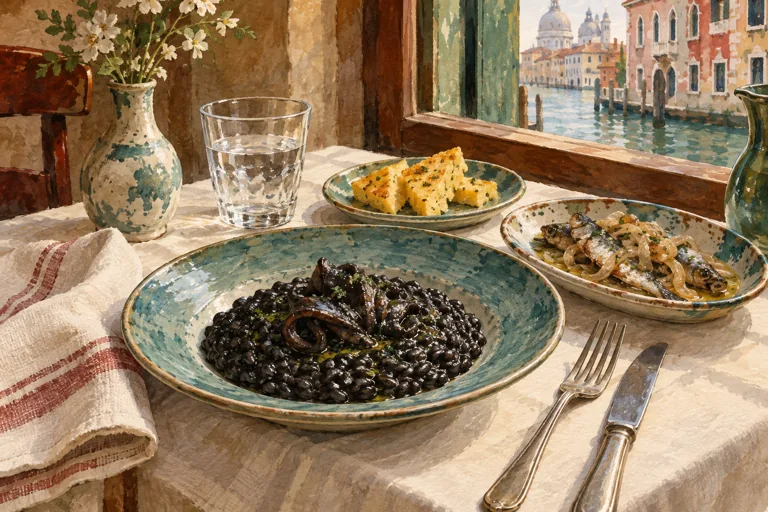
The onions arrive with the fish. On a plate of sarde in saor they can be generous enough to hide a sardine completely, so the first forkful may taste mostly of softened onion and vinegar. Lift a strip or two and look underneath. The fish has already been fried, while the onions have been cooked and dressed separately. When the two are layered and left together, the texture of each changes. It is a particularly revealing Venetian dish to order if you are interested in what happens between cooking a meal and serving it.
Why the onion belongs on the plate
The city’s introduction to Venetian food places sarde in saor among the sweet-and-sour preparations associated with the lagoon city. The regional tourism office’s recipe for sarde in saor describes frying the little fish and cooking thinly sliced onion with oil before adding vinegar. Its ingredient list gives a very substantial quantity of onion. What looks at first like a garnish actually supplies much of the volume, aroma and liquid in which the fish rests.
Look at the onions when the dish comes to the table. A thick piece may retain its shape and offer a little resistance; a thinner ribbon may almost dissolve against the fish. The vinegar gives a distinctly sharp impression, while the softened onions bring their own sweetness. These qualities can coexist in the same mouthful. If your plate includes raisins or pine nuts, try one bite without them and another with them. Their sweetness or crunch can move your attention onto a different feature of the dish.
Two kinds of cooking and a period of rest
The regional version starts by flouring and frying the fish. It also notes a variation in which the flour is omitted. That detail matters at a counter: the coating on a fish that has rested under onions can be hard to see. If ingredients matter to your group, ask specifically whether the fish was floured and what was added to the onions. A short translated dish name can identify the principal ingredients without telling you how the kitchen prepared them.
When it comes out of the frying pan, a small fish has a dry, heated exterior. Covered with the onion mixture, that surface takes up some of the dressing. Someone expecting the crackle of freshly fried seafood can miss much of what the cook has set out to achieve. Try a piece from beneath the onions and then one closer to the edge. The impression of richness, sharpness and softness can change even within a single serving. Resting is a step in the preparation, which explains why the dish can be served cold.
What does the word saor tell you?
The name describes a preparation that can be applied to other fish too. The regional guide mentions alternatives including mackerel and sole. Pay attention to the word before “in saor” when choosing from a menu. A diner who liked the sweet-and-sour onions around sardines may find another pairing that suits them equally well, while someone specifically seeking sardines should look for sarde. Ask how the fish is served and whether the portion is intended as a small appetizer or a fuller plate.
The method has historical associations with keeping fish. For a visitor the important consequence is on the tongue rather than in the luggage. A serving from a restaurant or counter is perishable food, and historical descriptions of storage offer little guidance about the particular dish you have been sold. Enjoy a prepared portion under the conditions the seller recommends. At the Rialto market, the interesting comparison is the size and shape of a fresh fish beside the same ingredient as a finished dish later in the day.
Choose a place to taste it on its own terms
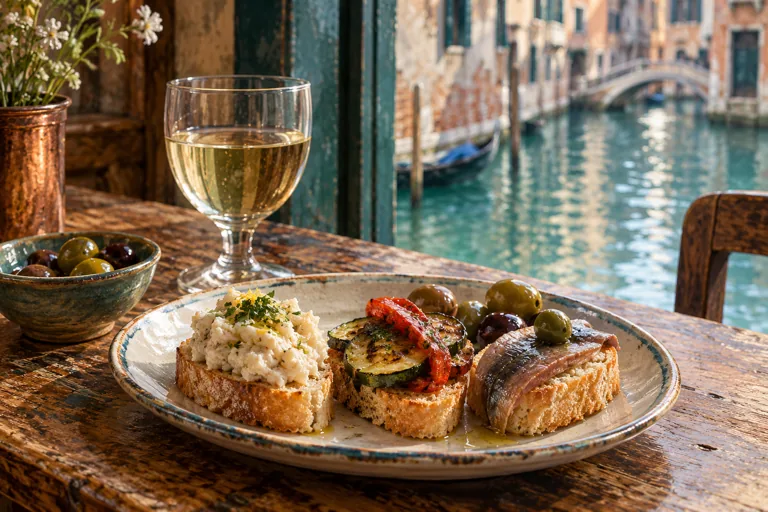
A small portion at a counter can be a good introduction, especially when there are several dishes to share. Ask the price and how the portion is counted before ordering for the table. In a seated restaurant, the Venetian lunch guide helps put a cold antipasto in the context of what follows. Our guide to cicchetti takes the smaller-scale counter visit on its own terms. Neither setting guarantees the dish will be on the menu that day.
If comparing Venice food experiences, look for the actual tastings, and ask about substitutions when a particular ingredient is important. For an independent tasting, you need only a modest serving and enough time to notice it. Try describing the last bite without using the words sweet or sour. You might remember the soft edges of a sardine, a long onion ribbon or the brief sharpness left behind by the vinegar. Those are unusually specific souvenirs of a simple plate.
Sources & further reading
Turn a good read into a great day.
Find a highly rated Venetian experience that brings these stories to life.
Explore related experiences →