What does a gondola’s shape tell you about its work?

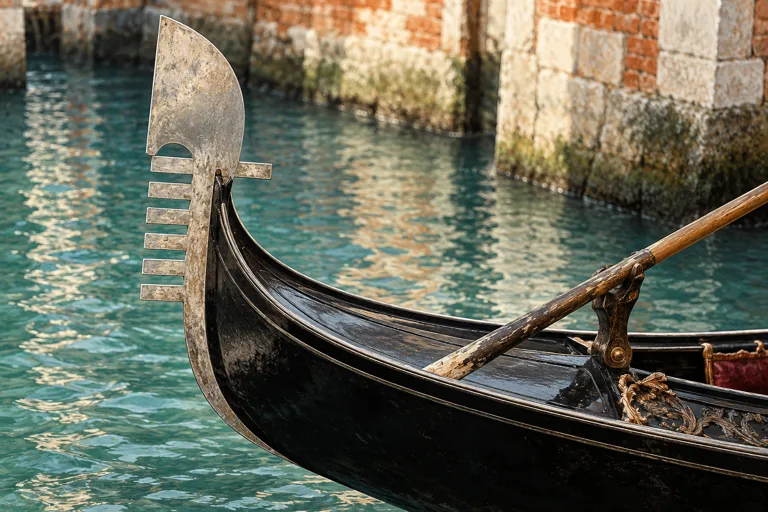
A gondola is easier to appreciate when you look at it as a working craft before treating it as a Venice symbol. The long hull, the oar and the curving wooden support for that oar are parts of a relationship between boat, rower and water. You do not need a naval-architecture lesson to notice it. A few minutes of careful observation can make a later ride much more interesting.
This is a guide to looking, not an instruction manual for handling a boat. Watch from a safe public position, keep landing places clear and leave equipment untouched. If you choose a ride afterward, the practical decisions in our shared-versus-private gondola guide remain important. Understanding the craft enriches the choice; it does not replace checking the actual service.
Notice a form built around use
The City of Venice’s introduction to El Felze, the association of gondola-related craftspeople, describes the boat’s slender, asymmetric hull and the range of trades involved in making it and its fittings. That is a useful correction to the idea that one attractive silhouette is the work of one maker alone. Construction, carving, metalwork and other specialized skills contribute to the result.
Look at a moored gondola from a permitted viewpoint and compare its ends, sides and seating area. Ask where you think the rower stands and where passengers are placed. Do not try to diagnose an individual hull’s design from one angled photograph. The first useful lesson is simply that familiar forms can contain decisions made for use, balance and movement.
If a boat is moving, follow the relationship between the rower’s posture and the oar. You may notice adjustments that are easy to miss when you concentrate only on photographing the passing palace. Keep observing without expecting a professional at work to stop and provide a demonstration.
The forcola is sculpture with a job
The curving wooden oar support is called a forcola. In maker Saverio Pastor’s explanation, its different contact points allow the oar to be used in several positions while the rower stands facing forward. The complex shape is connected to maneuvering, not added as decoration around an otherwise simple fitting.
Look for the difference between a curve that invites you to follow it visually and a surface that actually meets the oar. This is an enjoyable design question: an object can be beautiful precisely because its form answers a demanding practical problem. You need not understand every contact point to recognize that the shape deserves more than a quick souvenir glance.
Our Dorsoduro art-day guide encourages attention to objects and their settings. Apply that habit to craftsmanship too. A working tool, an exhibition object and an item sold as decoration may look related while carrying very different histories and purposes.
Ask a maker about work, not only about a price
Pastor’s account of contemporary oarmaking emphasizes individual fitting, handwork and maintenance. These are useful themes for a respectful workshop conversation when visits are permitted. Ask what changes for a particular rower, what the wood requires and how an object is maintained over time. Avoid assuming that every shop offers a drop-in demonstration or that watching someone work is included in a general walking tour.
Before photographing a workshop, ask. Keep the entrance clear, do not handle tools and accept that a craftsperson may be concentrating on paid work rather than presenting an attraction. If you want a scheduled explanation, choose an experience that explicitly provides one. The same distinction is useful when following our Murano glass guide: making, explaining and selling can be connected without being identical activities.
Translate curiosity into a better booking decision
A scenic ride does not necessarily include a craft lesson, commentary or a workshop stop. Read the itinerary and ask about the part that matters most to you. If your interest is the movement of the boat, a straightforward ride may be enough. If you want detailed history, look for an explicitly guided component rather than expecting the gondolier to provide it while navigating.
The municipal gondola-service page publishes the current service conditions and notes that traffic, tides and weather can affect duration. Compare those conditions with the terms of any package, especially when it combines land activities and boat time. Confirm the meeting point and finish before fitting another reservation around it.
Browse our gondola and canal experiences with those distinctions in mind. On a later Florence visit, the Oltrarno walking guide offers another setting for noticing living craft without intruding. A memorable encounter with a gondola can begin well before boarding: with the realization that a beautifully shaped object is also someone’s carefully maintained working tool.
Sources & further reading
Turn a good read into a great day.
Find a highly rated Venetian experience that brings these stories to life.
Explore related experiences →