Murano Glass: What Should You Look for Beyond the Demonstration?
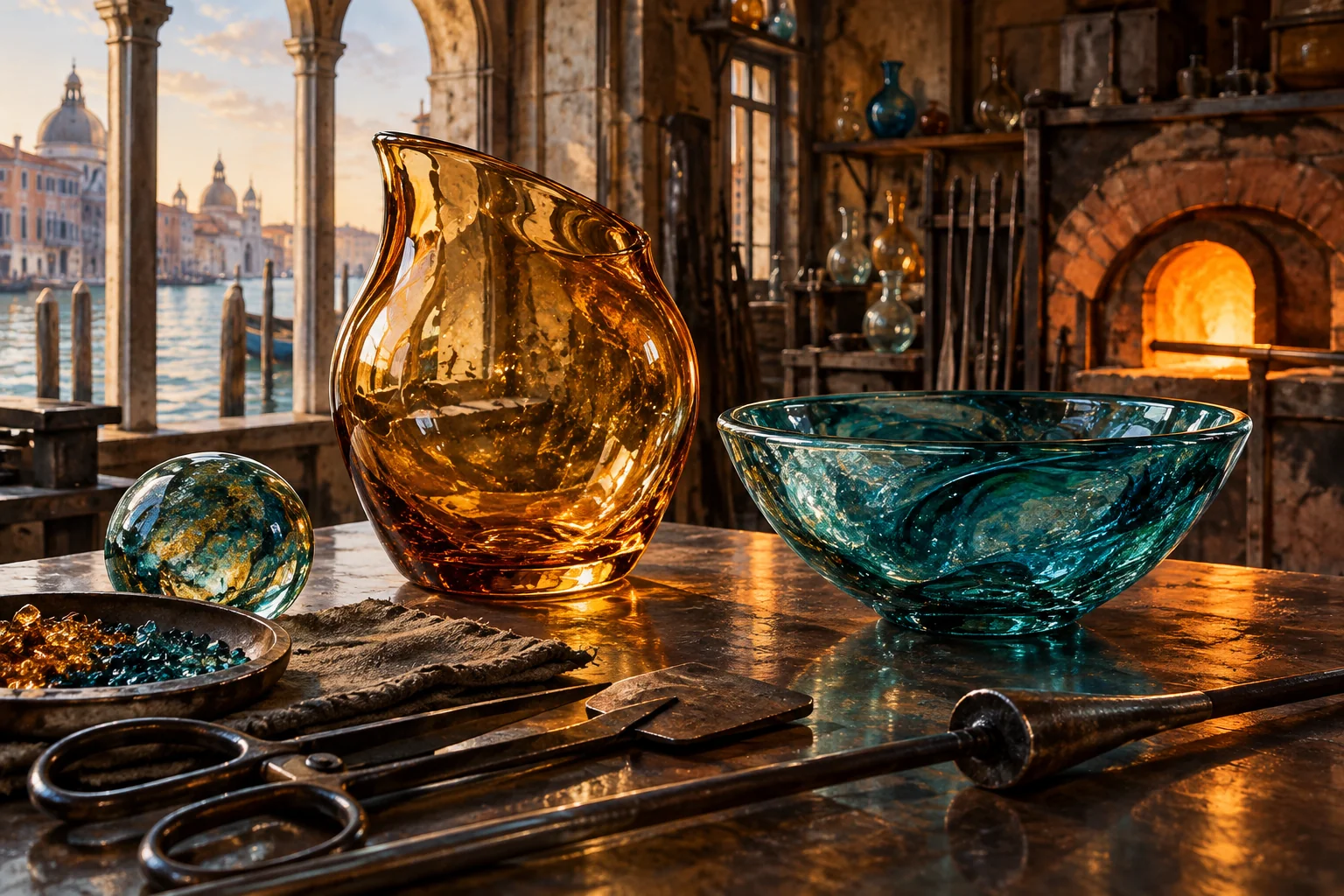
A glassmaking demonstration can be mesmerizing: heat, movement and a material that seems to change its mind while you watch. Yet Murano becomes more interesting when you look beyond the impressive few minutes at the furnace. Ask about design, technique, finishing and the relationship between a contemporary object and a much longer craft tradition. That approach turns a shop visit into a richer encounter with making.
Give the island more than one purpose
Consider combining a demonstration with time in the Glass Museum or a modest independent walk. The museum’s official collection overview traces Murano glass through historical periods and design developments. Seeing objects made for different uses can help you notice more in a workshop: not just whether something is beautiful, but how a maker solves problems of shape, surface and balance.
A museum and a commercial demonstration serve different roles. The former offers a collection and interpretation; the latter may introduce a working process and a sales space. Both can be worthwhile, but do not assume one automatically substitutes for the other. Check whether museum admission is actually included in an island tour if it matters to your day.
Watch the process without turning it into a stunt
At a demonstration, follow the staff’s instructions about where to stand and what to avoid touching. Heat and tools are part of the working environment, even when the presentation appears effortless. Notice the sequence of movements rather than only the final reveal. You might ask which stages you are seeing and which happen before or afterward.
A brief demonstration cannot show every skill involved in a finished piece. Design decisions, cooling, cutting, polishing and other work may lie outside the short presentation. Let that limitation make you more curious rather than disappointed. A useful question is how the object changes between the furnace and the moment it is ready to leave the workshop.
Look closely at the finished object
Compare thickness, translucency, color and the relationship between decoration and form. Does the piece depend on light passing through it or reflecting from its surface? How does it look when you move a little to one side? You do not need specialist vocabulary to make these observations. Start with what your eyes tell you, then ask for the technique’s name if you want to learn more.
The museum’s collection includes work from different centuries and sections on beads, murrine and modern design. That range is a reminder that “Murano glass” is not one visual style. An understated vessel and an elaborate decorative object can invite entirely different kinds of attention. Give yourself permission to prefer the less theatrical piece.
Ask practical questions before buying
If you are considering a purchase, ask who made it, where it was made, what documentation is provided and how the piece should be cared for. Ask about the total price, packing, shipping and the written terms for damage or returns. A friendly demonstration does not oblige you to buy, and a clear conversation is better than a hurried decision made as a group prepares to leave.
Consider the journey home. Something small and robust may suit your luggage better than a fragile object you must worry about for the rest of the trip. If shipping is offered, read the details rather than assuming every cost or risk is covered. These are ordinary purchasing questions, and a reputable seller should understand why you ask them.
Choose the right excursion format
Our lagoon-island experiences include different balances of transport, guided time and free time. Some combine Murano with Burano, while others focus more closely on glass. Read the stop durations and any workshop arrangements. If you want to make something yourself, verify that the experience is genuinely hands-on and check age, clothing and collection requirements.
Use our island-day planning guide to decide how much to combine. For a complementary craft story, read about Burano and its lace traditions. Glass and lace demand different materials and movements, but both reward the same travel habit: slow down enough to notice the skill behind the object.
Sources & further reading
Turn a good read into a great day.
Find a highly rated Venetian experience that brings these stories to life.
Explore related experiences →