Sant’Erasmo in Venice: how do you plan an island walk around a working landscape?

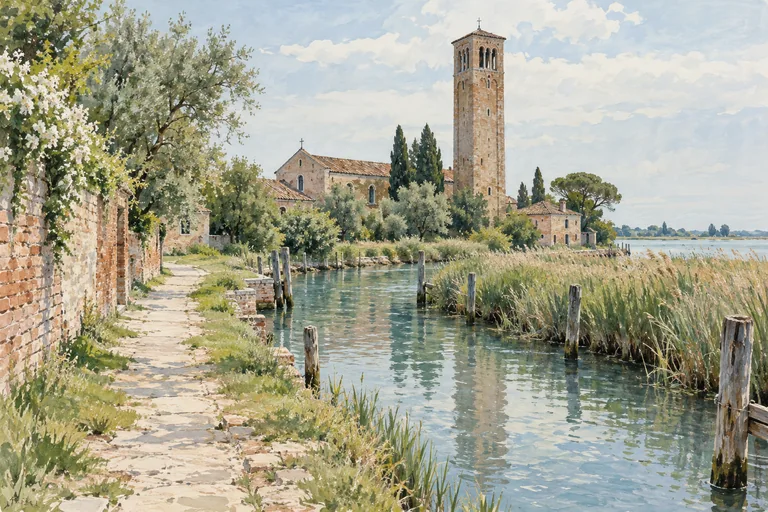
Sant’Erasmo invites a useful change in how you look at Venice. Instead of asking which palace comes next, you can notice vegetable plots, field boundaries, water and the space between buildings. This is an inhabited, working island in the lagoon. A rewarding visit begins with that fact, rather than with the idea that every field is a visitor attraction or every quiet path leads to a public garden.
Make the outing deliberately modest: one realistic walking route, a confirmed return connection and enough time to stop without rushing. Our guide to planning a Venice waterbus journey explains why the destination, direction and landing matter. An island name alone is not a complete transport plan, particularly when a place has more than one landing and your walk starts somewhere specific.
Read the landscape before making a shopping list
Venezia Unica’s island guide describes Sant’Erasmo’s vineyards, orchards and vegetable growing, including its association with purple artichokes. These details help explain what you see, but they do not promise that a particular crop will be ready during your visit. The early artichoke buds known as castraure belong to spring; an October walk should not be sold to yourself as a spring harvest experience.
Look instead at the forms of cultivation. How are rows organised? What separates a plot from a path? Where does water become visible beyond the land? You can appreciate the skill involved without entering a field, picking produce or assuming a farmer has time to give an impromptu tour. Photograph from public space and ask before photographing people at work or entering a business courtyard.
Let the season shape the outing
A lagoon walk has less shelter than a route through narrow city streets. Check the forecast, carry a layer suited to wind and choose footwear for the surfaces and weather you will actually encounter. A bright forecast is not a guarantee of dry ground. If conditions make your chosen route uncomfortable, shorten it rather than pressing on to complete an imaginary compulsory circuit.
Bring drinking water and decide where a meal or snack will fit. Check the opening of any business you intend to rely on, especially outside the busiest season. A named restaurant on a map is not evidence that its kitchen will be open at your arrival time. The same principle applies to bicycles: confirm a real rental arrangement before building the day around one, and follow local signs and access rules.
Keep history in its proper place
The municipal tourism guide identifies the Torre Massimiliana in the island’s southwest and dates its Austrian construction to 1843–1844 on an earlier fortified site. It adds a military layer to an outing often described entirely through food. An exterior stop can be worthwhile even when an interior is not available; do not assume a building on an island route is a daily walk-in museum.
Use that contrast as a looking exercise. The same landscape can support food production, habitation, transport and defence at different times. You do not need to claim that the scene before you is unchanged for centuries to find it interesting. Ask which features you can observe directly and which require a historical source. The distinction keeps a gentle walk from becoming a collection of attractive but unsupported stories.
Build the return journey first
Consult the current ACTV waterbus information for your travel date and check service notices as well as the timetable. Identify the landing nearest the end of your planned walk, leave time to reach it and keep a practical fallback. Do not treat a seasonal timetable found in an old article as a current promise, or a boat passing nearby as one that must call at your landing.
Our Venice tide-planning guide provides useful context for conditions around the lagoon. For a different island day, Torcello has its own history and access arrangements; adding it automatically would change the whole transport calculation. Keep Sant’Erasmo satisfying on its own terms.
Browse our Venice experiences collection if you prefer an organised outing, checking whether Sant’Erasmo is actually included. The connection between productive landscapes and city food continues elsewhere: Lake Como’s autumn ferry guide is useful for a later journey where water transport also shapes the day. Each place needs its own timetable, geography and unhurried expectations.
Sources & further reading
Turn a good read into a great day.
Find a highly rated Venetian experience that brings these stories to life.
Explore related experiences →